


%20rotate(45)'%3e%3cline%20id='Line_38'%20data-name='Line%2038'%20x2='23.314'%20y2='23.314'%20transform='translate(106.5%20402.5)'%20fill='none'%20stroke='%23fff'%20stroke-linecap='round'%20stroke-width='7'/%3e%3cline%20id='Line_39'%20data-name='Line%2039'%20x1='23.314'%20y2='23.314'%20transform='translate(106.5%20402.5)'%20fill='none'%20stroke='%23fff'%20stroke-linecap='round'%20stroke-width='7'/%3e%3c/g%3e%3c/svg%3e)


'%3e%3ccircle%20id='Ellipse_50'%20data-name='Ellipse%2050'%20cx='18.5'%20cy='18.5'%20r='18.5'%20transform='translate(1235%201254)'%20fill='%23fff'/%3e%3cg%20id='Ellipse_49'%20data-name='Ellipse%2049'%20transform='translate(1221%201241)'%20fill='none'%20stroke='%2358a3f2'%20stroke-width='6'%3e%3ccircle%20cx='22'%20cy='22'%20r='22'%20stroke='none'/%3e%3ccircle%20cx='22'%20cy='22'%20r='19'%20fill='none'/%3e%3c/g%3e%3c/g%3e%3c/svg%3e)
%20rotate(132)'%3e%3cg%20id='Group_139'%20data-name='Group%20139'%20transform='translate(1302.705%20279.566)'%3e%3cline%20id='Line_47'%20data-name='Line%2047'%20x1='13.934'%20y2='13.934'%20transform='translate(0%200)'%20fill='none'%20stroke='%23fff'%20stroke-linecap='round'%20stroke-width='5'/%3e%3cline%20id='Line_48'%20data-name='Line%2048'%20x2='13.934'%20y2='13.934'%20transform='translate(0%2013.934)'%20fill='none'%20stroke='%23fff'%20stroke-linecap='round'%20stroke-width='5'/%3e%3c/g%3e%3cg%20id='Group_140'%20data-name='Group%20140'%20transform='translate(1317.066%20279.566)'%3e%3cline%20id='Line_47-2'%20data-name='Line%2047'%20x1='13.934'%20y2='13.934'%20transform='translate(0%200)'%20fill='none'%20stroke='%23fff'%20stroke-linecap='round'%20stroke-width='5'/%3e%3cline%20id='Line_48-2'%20data-name='Line%2048'%20x2='13.934'%20y2='13.934'%20transform='translate(0%2013.934)'%20fill='none'%20stroke='%23fff'%20stroke-linecap='round'%20stroke-width='5'/%3e%3c/g%3e%3c/g%3e%3c/svg%3e)

'%3e%3ccircle%20id='Ellipse_57'%20data-name='Ellipse%2057'%20cx='15.5'%20cy='15.5'%20r='15.5'%20transform='translate(580.485%20794.347)%20rotate(131)'%20fill='%2358a3f2'/%3e%3cg%20id='Ellipse_58'%20data-name='Ellipse%2058'%20transform='translate(595.249%20792.605)%20rotate(131)'%20fill='none'%20stroke='%23fff'%20stroke-width='4'%3e%3ccircle%20cx='18'%20cy='18'%20r='18'%20stroke='none'/%3e%3ccircle%20cx='18'%20cy='18'%20r='16'%20fill='none'/%3e%3c/g%3e%3c/g%3e%3c/svg%3e)
'%3e%3cpath%20id='Path_7'%20data-name='Path%207'%20d='M0-6.967H87.133V681.2h718.05l-72.169,88.635H0Z'%20transform='translate(9.999%201203.407)'%20fill='%23fff'%20stroke='%23fff'%20stroke-width='56'/%3e%3cpath%20id='Path_8'%20data-name='Path%208'%20d='M-8.7,0H1469.661V505.7h-87.524V87.3H-8.7Z'%20transform='translate(243.164%20459.451)'%20fill='%23fff'%20stroke='%23fff'%20stroke-width='56'/%3e%3cpath%20id='Path_10'%20data-name='Path%2010'%20d='M0,85.609,82.932-26.079V542.036H0Z'%20transform='translate(1631.894%201350.975)'%20fill='%23fff'%20stroke='%23fff'%20stroke-width='56'/%3e%3cpath%20id='Path_6'%20data-name='Path%206'%20d='M0,128.744,148.4-38.262V928.774h763.6L541.624,1327.34l112.331-251.426H0Z'%20transform='translate(-0.001%2038.262)'%20fill='%23fff'/%3e%3cpath%20id='Path_9'%20data-name='Path%209'%20d='M381.966-54.467,278.906,183.272H998.832L278.906,1087.232h843.065L947.835,1244.365H-55.977L683.579,327.312H55.774Z'%20transform='translate(798.098%20889.001)'%20fill='%23fff'/%3e%3c/g%3e%3c/svg%3e)
.NET and Why You Should Care
What is .NET?
.NET is an open-source developer platform from Microsoft for building all sorts of applications.
What's a Developer Platform?
- A developer ecosystem
- A set of tools and libraries that accelerate the development of your applications
.NET Strikes a Balance Between
- Productivity
- Performance
- Security
- Reliability
What Can You Do With it?
Web
- ASP.NET
- Blazor (Server & WebAssembly)
Mobile
- Xamarin
- MAUI
Desktop
- Blazor Hybrid
- WinUI and WinAppSDK
- MAUI
Microservices and Cloud
- Serverless
- Designed for Docker
Machine Learning
- ML.NET
- Apache Spark
Game Development
- Unity
- MonoGame
- Godot
IoT (Internet of Things)
- IoT Libraries (including device bindings)
- Wilderness Labs Meadow Board
.NET Does All of This While Using the Same:
- Programming languages
- Libraries
- Tools and techniques
How Does .NET Do All of This?
Programming Languages
- Visual Basic
- F# (F Sharp)
- C# (C Sharp)
Tooling
- Base Class Library (BCL)
- Nuget (package management)
- Visual Studio (Windows & Mac)
- Command line tools -
dotnet
The Compiler
- Code Analysis
- Language Server
- Type Checking
- Refactoring/Formatting
- And of course, compiling

Common Intermediate Language (CIL)
.assembly Hello {}
.assembly extern mscorlib {}
.method static void Main()
{
    .entrypoint
    .maxstack 1
    ldstr "Hello, world!"
    call void [mscorlib]System.Console::WriteLine(string)
    ret
}
Common Language Runtime (CLR)
- The .NET virtual machine
- Just in time (JIT) compilation
- Memory management/garbage collection
- Type safety and exception handling
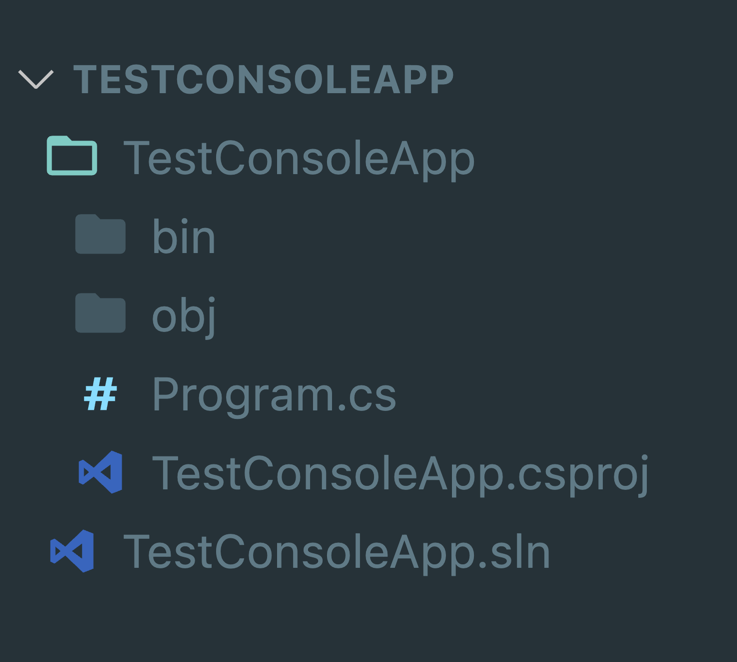
Anatomy of a .NET Project
Files and Layout
.csproj- Defines a C# project- Build configuration
- Dependencies
.sln- Organizes multiple projects (monorepo).cs- C# source fileobj- Object, or intermediate, filesbin- Binary files
Assemblies
- Unit of deployment and versioning
- Contains compiled code, resources, metadata
- Can be process assemblies (
.exe) or library assemblies (.dll) - Can have dependencies on other assemblies
- Loaded and executed by .NET runtime
A Note on .NET Versions
- .NET Framework
- .NET Core
- A unified .NET (.NET 5+)
C# Syntax
using System;

namespace MyNamespace;

class Program {
    static void Main(string[] args) {
        string message = "Hello, world!"
        // var message = "Hello, world!"
        Console.WriteLine(message);
    }
}
C# Syntax - Control Flow
static void Main(string[] args) {
    if (myInt > 10) {
        // do something
    } else {
        // do something else
    }

    foreach (var item in myList) {
        // do something with item
    }

    try {
        // some code that might throw an exception
    } catch (Exception ex) {
        // handle the exception
    }
}
C# Syntax - Properties
class Person
{
    private int age;
    public int Age {
        get { return age; }
        set { age = value; }
    }

    public string FirstName { get; set; }
    public string LastName { get; set; }

    public string FullName => $"{FirstName} {LastName}";
}
C# Syntax - Inheritance
public class Animal {
    public virtual void MakeSound() {
        Console.WriteLine("The animal makes a sound");
    }
}

public class Cat : Animal {
    public override void MakeSound() {
        Console.WriteLine("The cat meows");
    }
}
C# Syntax - Attributes
[Serializable]
public class MyClass {
    [Obsolete("This method is deprecated.")]
    public void MyOldMethod() {
        // do something old
    }
}
C# Syntax - Generics
public class MyGenericClass<T> {
    private T[] myArray;

    public MyGenericClass(int size) {
        myArray = new T[size];
    }

    public void SetItem(int index, T item) {
        myArray[index] = item;
    }

    public T GetItem(int index) {
        return myArray[index];
    }
}
Demo! 🎉
glitchedmob/dotnet-and-why-you-should-care-demoSo Why Should You Care?
Productivity 🔨
- Cross platform
- Covers most application types
- Large BCL for reusable code
- Powerful debugging tools
Performance 🔥
- JIT compilation
- Native interoperability
- Multi-threading support
Security 🔒
- Regular updates
- Strong Cryptography
- Sandboxed execution environment
Reliability 🛡️
- Strong type system
- Automatic memory management
- Stable runtime
- Support from Microsoft